

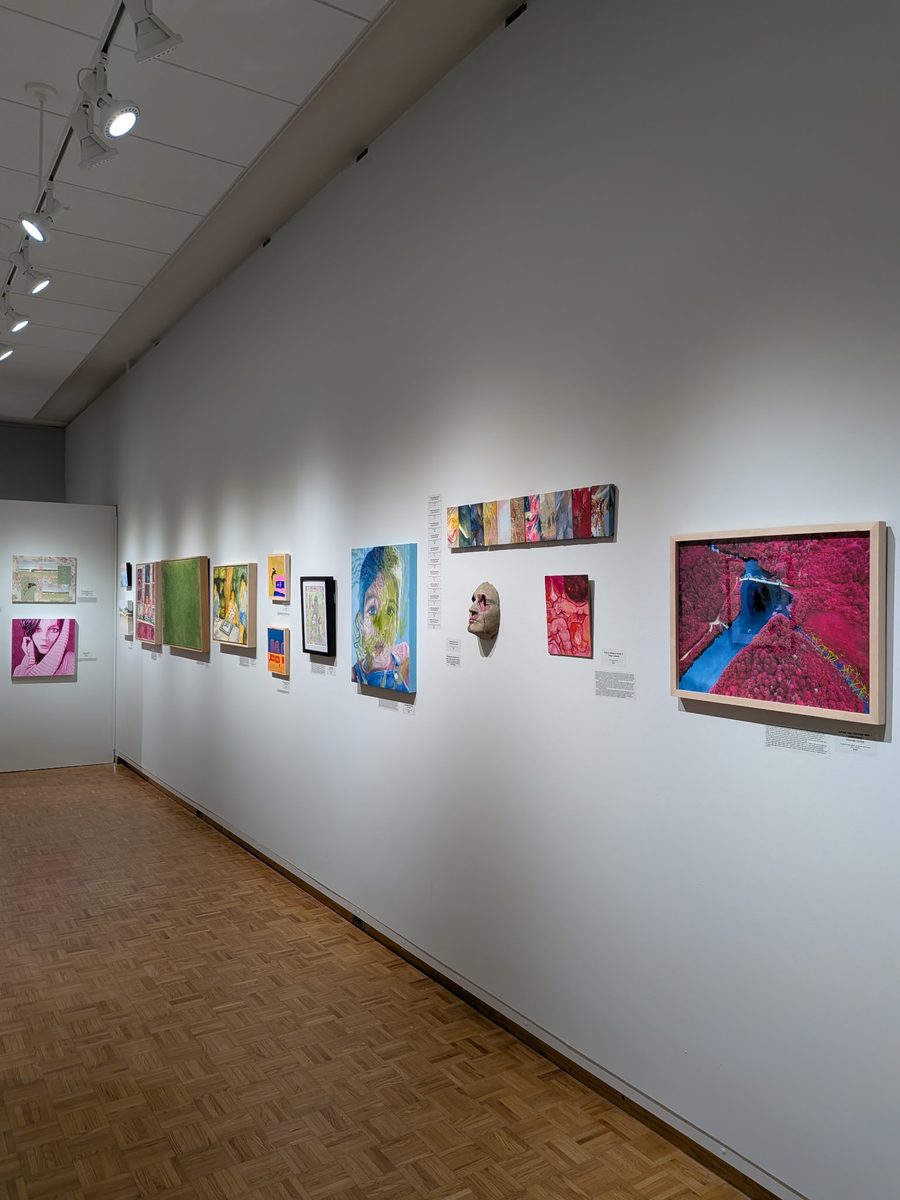
Colour takes many forms in Colour Is…, on now at the Blyth Festival Art Gallery (431 Queen Street, Blyth). Curated by Guelph artist K. Percival, the exhibition brings together artists from Guelph, Huron County, Southwestern Ontario, and Nova Scotia, with colour acting as a common thread between their work. We spoke with K. Percival about the exhibition, the unexpected Guelph connection and the many ways artists can use colour to communicate.
When you look at the exhibition as a whole, in what ways does colour connect all of the different works?
Colour connects all of the works through the underlying idea of perspective. We can look at the same colour, but we will never experience it in exactly the same way because of the biological differences in how our eyes perceive colour. While colour is the obvious commonality throughout the exhibition, the deeper connection is the individual perspective represented through each artist’s interpretation and use of it. Every artist is using colour to communicate something different.
There are many different ways artists in the show have approached the idea of colour. What were you looking for when selecting the works for the exhibition?
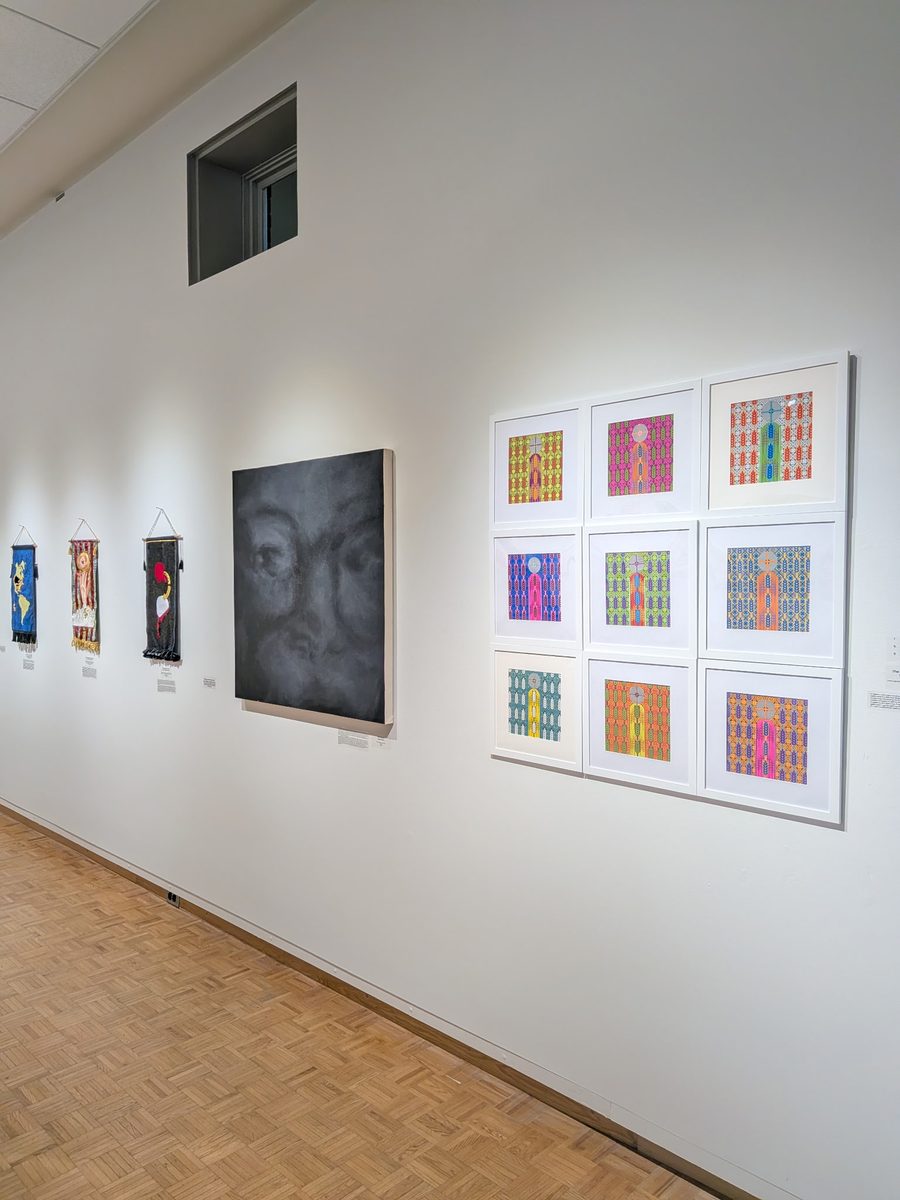
When I was selecting the work, I was looking for a variety of ways artists intentionally use colour. One of the things I wanted to explore was the idea that colour is also a technology. The way artists work with colour has changed dramatically as new pigments, materials and processes have been developed. The invention of commercially available paint in tubes, for example, changed what artists were able to do with colour and where they could work.
I wanted the exhibition to look beyond colour as simply an aesthetic choice and explore how it can communicate meanings that go much deeper than its surface appearance. In the show, colour is used to discuss identity, the climate crisis and evolution, politics, memory, childhood, and the experience of capturing a particular time and place, to name a few.
Were there any pieces that changed the direction of the exhibition during installation or prior?
Scale is always a challenge when you’re selecting work from a computer screen. Nothing particularly changed the overall direction or message of the exhibition, but installation definitely became a game of Tetris. I had to make sure the works were talking to each other in the gallery the way I had imagined they would during the selection process.
There is a strong Guelph connection among the artists in the show. Do you see this exhibition as creating a connection between the Guelph arts community and the arts community in Huron County?
It was never intentional to have such a strong Guelph influence in the show, but I am incredibly appreciative and proud that so many Guelph artists saw the call and responded. Creating a connection between Huron County and Guelph was, quite honestly, a happy accident in the best way.
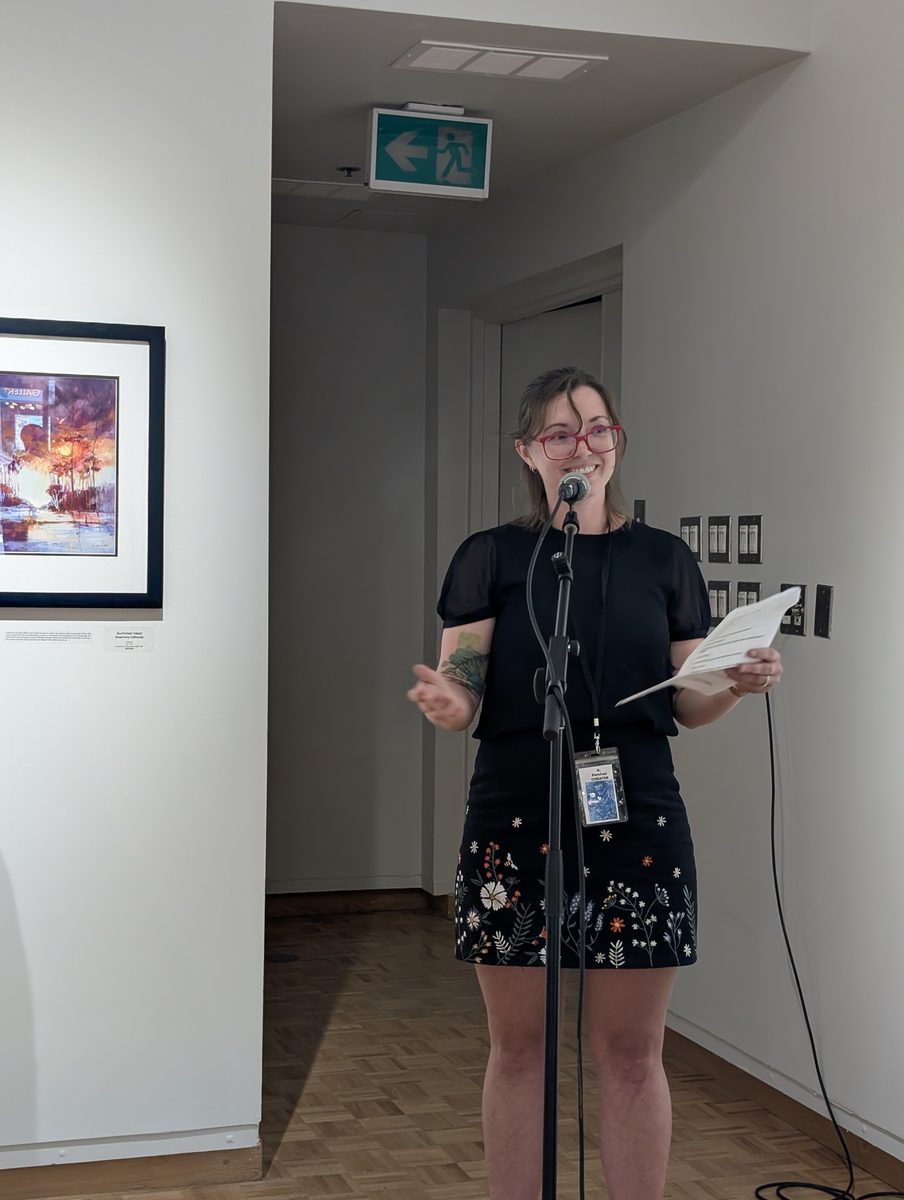
We also have artists from other parts of Southwestern Ontario and Nova Scotia represented, so the exhibition has ended up connecting artists and communities that might not otherwise have come together. As an artist and curator, I think that is one of the most exciting things about the show. It tells me that the conversation about the power of colour as a communication tool is only just beginning.
Has curating this exhibition changed the way you utilize colour in your arts practice?
I am excited to see how working on this show will influence my own practice. I have been inspired by the different ways the artists in the exhibition think about and use colour. Rather than giving me answers, the exhibition has left me with more questions and ideas for research and development in my own work.
So while it hasn’t influenced my practice yet, I know it will find its way into future projects.
What’s next for you?
I am currently in the final stages of preparing for my next exhibition, Fragmented Recollection: Memory in Colour, at Homer Watson House & Gallery from September 11 to November 9, 2026. The exhibition explores memory, dementia, and the way emotional experiences can remain even when specific details begin to disappear. Colour plays an important role in that work as a way of communicating emotions such as nostalgia, fear, comfort, grief and uncertainty.
I am also preparing to participate in this year’s Guelph Studio Tour as an Emerging Artist showing at GroundFloor Arts. So, there is definitely no shortage of colour-related work happening in my studio right now!
You can follow K. Percival’s artistic practice on their website, Instagram, or by subscribing to their newsletter.